Showing posts with label Fortuny. Show all posts

Our Fashionating Museum

by Nancy DeWitt
© Fountainhead Antique Auto Museum


If our name wasn't already so long, I'd suggest we change it to the Fountainhead Antique Auto and Historic Fashion Museum. For some time we've had more fashions than cars on the floor; in fact, we presently have over 100 outfits on exhibit! I'm told that we are now have the largest fashion collection on permanent display in the western United States. If you love fashion history and haven't visited us, you are really missing out!

Originally begun as a complement to the automobiles with about ten garments on display, the collection now encompasses an extensive array of costume history. Ranging from the 18th century to the mid 20th, the collection now includes everyday wear and formal dress from 200 years of American style.


The gem is our early 20th century collection featuring Edwardian elegance, Empire Revival chic (including "Titanic dresses"), and Flapper shimmer. We presently have a number of 1920s evening dresses on display, including richly beaded and sequined shifts. We are also fortunate to host pieces from designers like Fortuny, Callot Soeurs, Edward Molyneaux, and Maria Gallenga.


We also house a notable assortment of 19th century bustled silhouettes, includible some formidable leg-of-mutton sleeved dresses from the 1890s. Our 1930s garments include bias-cut, curve hugging gowns, daywear, and tailored outfits, including pieces from designers Ceil Chapman and Hattie Carnegie.


The fashion collection does not stop at clothing. We also have a wide range of accessories on exhibit, including shoes, purses, gloves and jewelry dating back to the 18th century. Of course, no exhibit would be complete without hats. You can see some of our most interesting examples in our current exhibit, "Beauty and the Bird: A Tale of Feathers, Fashion and Our Fowl Obsession." This exhibit, originally scheduled to close last March, has been extended by popular demand.

"We weren't expecting it, but this was a 'gold-star' attraction. The cars were superb, but the antique clothing collection was out of this world!"  TripAdvisor Reviews

Coming to Fairbanks to see the Fountainhead Antique Auto Museum and other area attractions? Support the museum by staying right here at Wedgewood Resort. All guests receive half-price admission to the museum!


Fortuny’s Delphos Gown: The Snowflake of Fashion

by Abigail Cuculo
© Fountainhead Antique Auto Museum

Photo by Brian Bohannon 
© Fountainhead Antique Auto Museum
When looking at historic costume, the word “comfortable” does not easily spring to mind. Opulent- sure, beautiful- definitely. Romantic, stunning, intricate, and, of course, how could they breathe!? But not “comfortable.” It is rare to find a garment that combines comfort with couture. Luckily, we have two such gems in our collection, and both are now on display. With fine pleats hugging the figure in lightweight, shimmering silk, the Fortuny Delphos gown was the Versailles of rational clothing, and the two we have are in remarkable condition.

Spanish artist Mariano Fortuny’s simple, elegant, and unconventional Delphos dress made a debut in 1907. Inspired by the chitons of ancient Greece, the design reflected the fervor for neo-classicism seen during the Empire Revival. Indeed, with the columnar silhouette and fluted figure, women wearing a Fortuny resembled the caryatids of Peloponnesian architecture. Originally intended as a tea gown, the Delphos dress was driven by the ideals of the Aesthetic movement and meant to be worn without the elaborate underpinnings of the Edwardian period, relieving women of their spiral steel and cotton cages (in other words: the corset). Made in one size and easily slipped over the head, the mushroom-like pleats would expand and adapt to the wearer’s body, providing freedom of movement and making the Delphos dress incredibly comfortable- and incredibly risqué for the covered and corseted Edwardian lady.


Famous for the beauty and versatility of his textiles, Fortuny handcrafted each dress (and every feature of the dress) in his Venice studio (known as “The House of the Magician”). The silks were fashioned in a variety of dyes ranging from cool greens, blues, and purples to glowing reds and golds. Many were saturated with vibrant hues, and could be dipped up to 15 times to enrich the color. Hand-blown, Venetian glass beads were commonly attached to the side seams, weighing down the lightweight silk. To further highlight a woman’s natural figure, often the gowns would also be paired with a sash, belt, or cord of satin or velvet, printed in a design inspired by various historic cultures. The snowflake of fashion, no two Fortuny gowns were identical, and he would never use the same design or color combination on any two pieces of fabric.


The most distinctive and unique feature of the gowns- the fine pleats- were created by a secret process Fortuny never revealed. With silk being a temperamental textile when it comes to pleating, Fortuny’s method somehow managed to attain a near permanent pleat. It is believed that he finger pleated the silk when wet, possibly holding the creases in place with rows of basting along the length of the panel, then heat set the fabric with porcelain rollers. To help maintain the pleats, the dresses were rolled up and stored in little hat boxes (no folding or hanging! Woo hoo!). With each dress made out of 4-5 panels containing between 430-450 pleats, the process was incredibly thorough, and has never been successfully duplicated since.

Photo by Brian Bohannon
© Fountainhead Antique Auto Museum
So basically, Delphos gowns were handmade, luxurious, custom creations, yet you could slip them over your head, shove them in a box, and never have to worry about steaming or ironing. It was the paradox of unfussy haute couture, a paradox beloved by enlightened women for decades. Soon, the dress was acceptable outside the home and was worn as sensuous evening wear by icons like Lillian Gish, Isadora Duncan, and Natacha Rambova (please look that lady up--she is pretty spectacular!).  With devoted clientele, Fortuny produced his extraordinary gowns relatively unchanged until his death in 1949. The surviving garments have been lovingly maintained and can occasionally be seen on some of the fashion elite today. Timeless, unique, and rare, Fortuny’s gowns are prized processions of the lucky museums that house them in their collection--and we’ve got two, so stop by and feast your eyes on Fortuny’s fabulous folds!


Coming to Fairbanks to see the Fountainhead Antique Auto Museum and other area attractions? Support the museum by staying at one of the Fountainhead Hotels. All guests receive half-price admission to the museum!

French Couture in Fairbanks

by Nancy DeWitt
© Fountainhead Antique Auto Museum

Temperatures dipped to -40 F in Fairbanks this week, but historic fashion curator Barbara Cerny has been busy heating up the museum with some hot new acquisitions. She recently found some amazing pieces to add to our collection, including another Fortuny gown, a Molyneaux flapper dress and a Gallenga tabard.

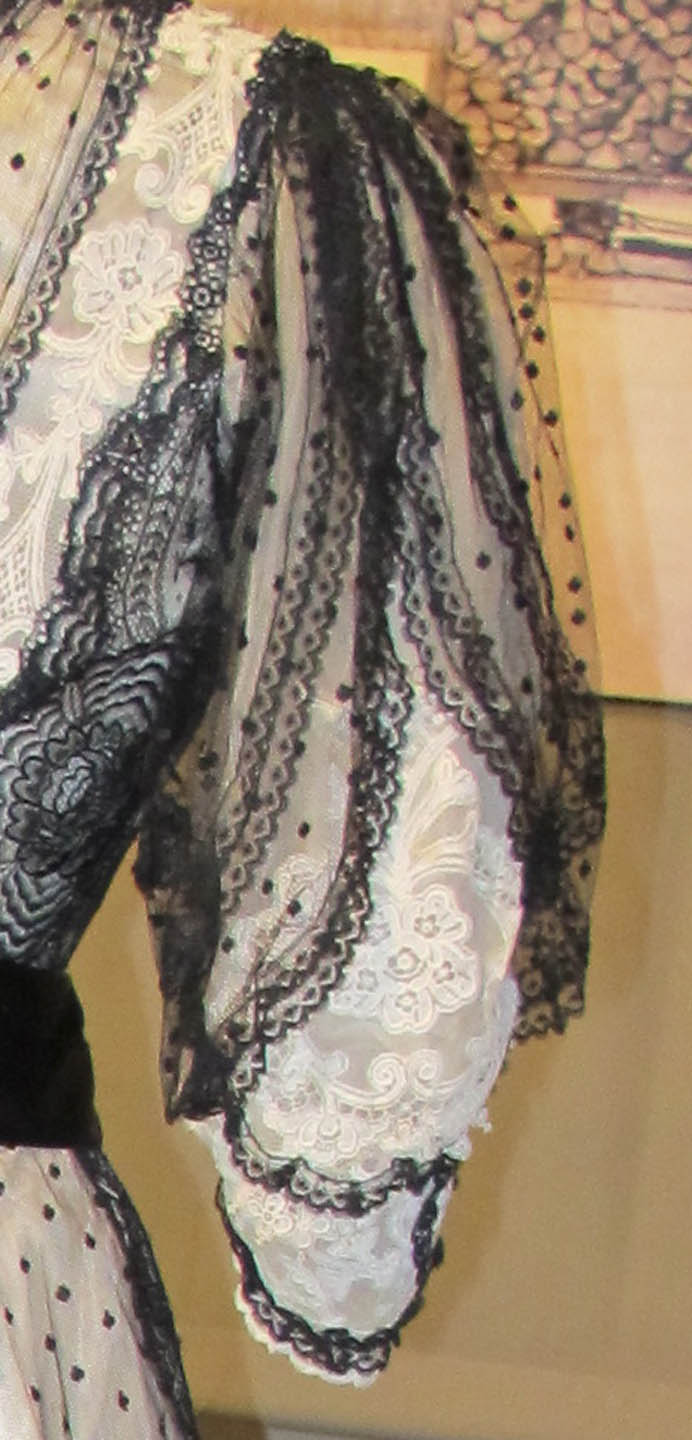
Our European couture selection also includes this lovely Callot Soeurs dress (ca. 1898-1904), which Barb put on display this fall. Sisters Marie Callot Gerber, Marthe Callot Bertrand, Régine Callot Tennyson-Chantrelle and Joséphine Callot Crimont launched their fashion careers with a shop that sold antique laces, ribbons and lingerie. In 1895 they established a couture house on Rue Taitbout in Paris. By the turn of the century they employed 600 workers and soon attracted clients from throughout Europe and America.

Marie was the chief designer and by the 1920s was called "the backbone of the fashion world of Europe." The sisters were renown for their extraordinary technique that combined exquisite fabrics like silk, satin, brocade and gold lamé with antique lace, lavish beading and intricate embroidery. More examples of their dresses and gowns can be seen here.

This trained evening gown has an underskirt made from taffeta-like silk overlain with a delicate layer of silk gauze and lace-adorned tulle. The laces forming the chain-like pattern and the skirt's border are made up of exquisite floral designs. Other delicate laces adorn the bodice and sleeves. You really need to see this gown in person to appreciate its detail and craftsmanship.

Madeline Vionnet, one of the 20th century's great designers, apprenticed at the House of Callot Soeurs. She later said. "Without the example of the Callot Soeurs, I would have continued to make Fords. It is because of them that I have been able to make Rolls-Royces."

We will be offering a series of curator's tours of our fashion collection this winter, starting with an introductory tour titled "Fashion Through the Decades" on Sunday, December 9. Museum historian Nancy DeWitt will showcase how fashions changed dramatically from the 1880s through the 1930s. The tour starts at 1 and is free with museum admission. Beginning in January, we will offer more in-depth tours that focus on specific fashion eras and the techniques and materials of individual garments in our collection.


Older Post ►
 

Copyright 2011 The Antique Car is proudly powered by blogger.com